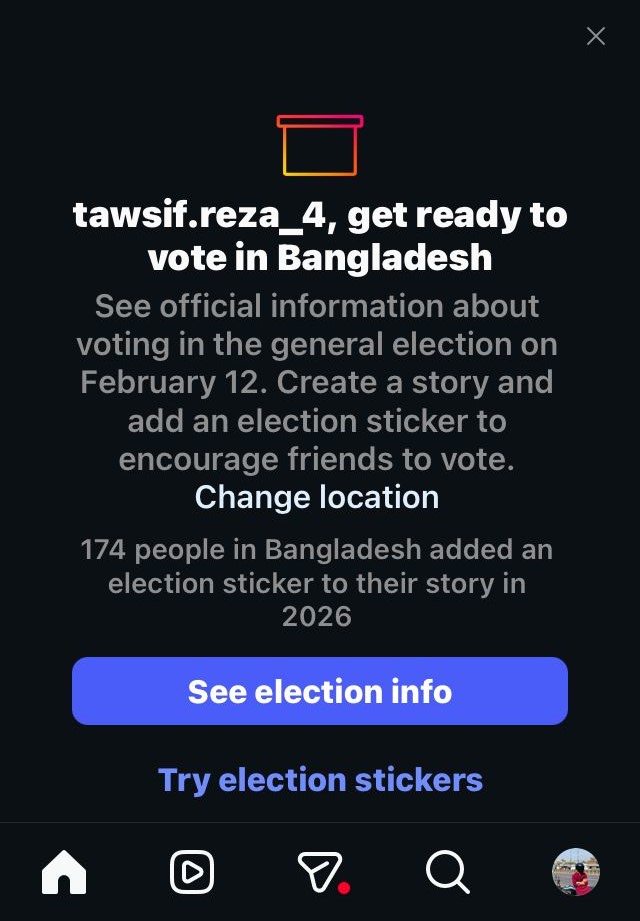
Just past midnight on February 5, millions of users in Bangladesh received a synchronized notification on Facebook and Instagram: “Get ready to vote in Bangladesh.” With no app update required, these alerts appeared as high-priority UI elements, demonstrating the power of Meta’s localized broadcast capabilities.
Table of Contents
The Geolocation Stack: How Meta “Locks” Your Region
Meta does not rely on a single signal to pinpoint your location. Instead, it uses a triple-verified geolocation stack to ensure these mandatory alerts reach the correct constituency:
- IP Intelligence: Every time you connect, your IP address is cross-referenced against commercial databases like MaxMind GeoIP2 that map internet traffic to physical coordinates in milliseconds.
- MSISDN (Mobile Station International Subscriber Directory Number): Your phone number’s country code (eg. +880 for Bangladesh) provides a persistent hardware-level signal.
- Profile Metadata: Your declared “Current City” or “Hometown” serves as the final verification.
When these three signals align, Meta’s Civic Engagement Protocols “lock” you into a geographic zone, ensuring the notification fires automatically.
The Election Calendar: Triggering Global Protocols
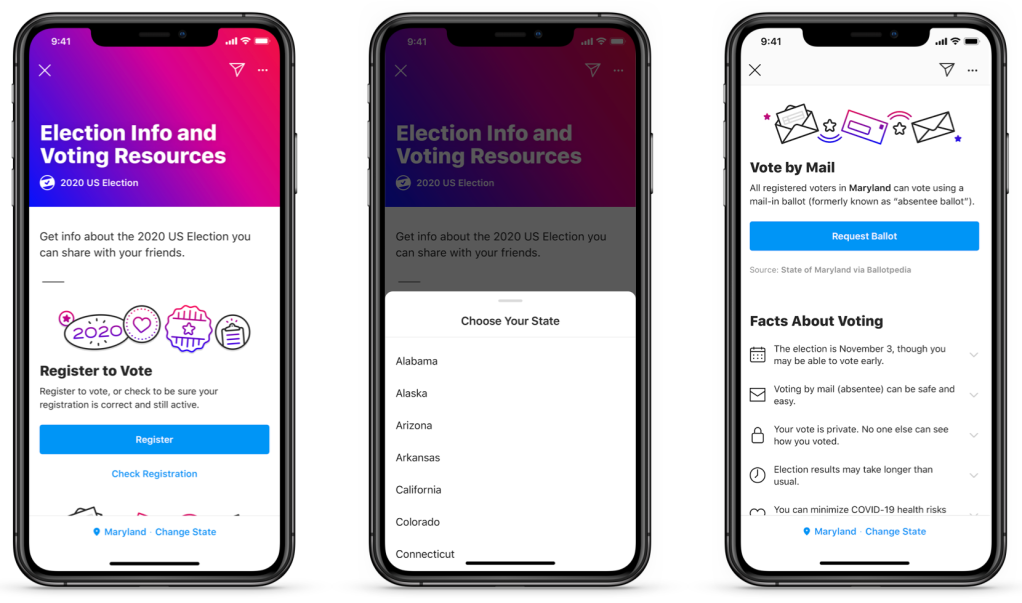
Meta maintains a comprehensive global database of election dates. When the Bangladesh Election Commission announced the February 12 vote, it was added to Meta’s master calendar, triggering a phased rollout of civic tools. This same infrastructure was deployed during previous elections in Kenya and Brazil and is set to run for the US midterms later this year.
Infrastructure-Level Broadcasting vs. Standard Alerts
Standard notifications (likes, follows) are “soft suggestions” governed by engagement algorithms. Election notifications, however, operate at the infrastructure level.
- Mandatory Deployment: These are treated as “Critical Alerts.” If the system identifies you as being in a specific zone, the message is pushed regardless of your typical app usage patterns.
- Simultaneous Cross-Platform Execution: Because the trigger happens at the server level, it hits Facebook (as a bilingual “Voter Alert”) and Instagram (as a “Voting Alert” banner) simultaneously, bypassing individual app logic.
Real-Time Social Proof and Interactive Elements
One of the most effective tools in the 2026 playbook is the use of Real-Time Social Proof. Notifications often include a live counter—such as “174 people added an election sticker”—to encourage participation.
This is powered by Server-Side Content Deployment:
- Instant Injection: Interactive stickers (ballot boxes, national flags) are uploaded to Meta’s servers and “unlocked” for a specific region.
- Geo-Locking: These assets appear “out of thin air” for users in Dhaka but are completely invisible to someone in London, as the app displays different content based on verified physical location.
The “Change Location” Safety Valve
Meta provides a “Change Location” option as a technical safeguard for:
- Expats using VPNs.
- Travelers temporarily in the country.
- Users with outdated profile information.
This feature allows Meta to refine its data while preventing “notification spillover” where the wrong users receive localized civic data.
The 2026 Election Playbook Timeline
Meta’s technical engagement typically follows four distinct phases:
- 30 Days Out: Activation of the Voter Information Center.
- 7 Days Out: Commencement of high-frequency Instagram and Facebook notifications.
- Election Day: Activation of real-time polling place locators and “I Voted” status tools.
- 48 Hours Post: System deactivation and archival of data.
Read Also: Google Launches ‘Project Genie’ App to Build Custom Virtual Worlds
The Bigger Picture
As digital rights organizations like UNESCO Dhaka and Digitally Right monitor these systems, the debate continues: Do these mandatory broadcasts empower democracy through information, or do they represent a new frontier of invasive geographic targeting?